


Part of our guide to international schools in Tokyo. Last verified: November 2026.
Can my child join a Tokyo international school mid-year? Yes, if the school has a place in your child’s grade. Most Tokyo international schools accept applications year-round for grades that aren’t entry years, but popular grades are often full, so start as soon as your move is confirmed, apply to several schools, and send complete documents early. Schools such as St. Mary’s and Nishimachi accept applications from families still living overseas, and Sacred Heart uses rolling admissions for Grades 1–12.
How mid-year places work
- Space decides: a school can only offer a place if a student has left the grade. Tokyo’s international families move often, so places do open during the year.
- Wait pools: at Tokyo International School, the wait pool isn’t first-come, first-served: applicants are reviewed against the admissions criteria when a space opens. Other schools work similarly, so a complete application matters more than an early one.
- Siblings: several schools give priority to siblings of current students (TIS says so explicitly).
- Rolling decisions: NewIS and Sacred Heart (Grades 1–12) make decisions on a rolling basis; TIPS is generally first-come, first-served once requirements are met.
Different school calendars
Most international schools run from August to June. Some don’t:
- September to August: K. International School Tokyo, Laurus International School of Science and NewIS.
- April to March (like Japanese schools): India International School in Japan and Tokyo West International School.
If you arrive in spring, an April-start school may let your child start a fresh year rather than join late in the year.
Documents to prepare before you move
- School reports for the last two years, plus the most recent report from the current year.
- Teacher references: ask current teachers before you leave, as schools often send confidential forms directly to them.
- Standardised test results (MAP, ISA, SSAT and similar) and any learning-support or psycho-educational reports.
- Passport copies and, for some schools, visa or residence card details. ASIJ requires non-Japanese students to hold a dependent visa and families to live in Tokyo.
- Health and immunisation records.
- Curriculum details for older students: subjects and levels, especially if switching between IB, (I)GCSE and AP.
See our admissions requirements comparison for school-by-school rules.
Grade placement
- Birthday cut-offs differ: September 1 at ASIJ, Sacred Heart and Seisen; August 31 at TIS and Nishimachi; July 31 at KIST. A child may be placed a year differently from their current school.
- Coming from the Southern Hemisphere or Japanese schools: calendars that start in January or April can mean your child has done more or less of a grade; schools will place by age and records.
- High school: joining in the middle of the IB Diploma (Grades 11–12) is difficult; aim for the start of Grade 9 or Grade 11 if you can. See our international high school guide.
A timeline for a mid-year move
- As soon as the move is likely: shortlist schools by curriculum, location and budget; email admissions to ask about space in your child’s grade.
- 3–6 months before: submit applications (pay application fees, usually ¥30,000–¥50,000) and request teacher references.
- 1–3 months before: online or in-person assessments and interviews; some schools interview overseas applicants online.
- On offer: one-time fees are often due within about two weeks. Budget for them; see our first-year budget guide.
- After arrival: register your address at the ward office; foreign-only children have no obligation to attend Japanese schools.
If there’s no place yet
- Stay on wait pools at more than one school and keep the admissions office updated on your arrival date.
- Consider schools with more capacity or rolling admissions, or a different area of Tokyo; see our area guides for Minato, Setagaya, Meguro and Shibuya, Koto and west Tokyo.
- Foreign children can attend a local public school free of charge in the meantime; Shinjuku, for example, notes that public school enrolment is meant to be continuous, not a short stopgap during holidays.
FAQ
Can I apply before I have an address in Tokyo?
Yes. Several schools accept applications from families overseas; St. Mary’s and Nishimachi say so explicitly.
Will my child have to repeat a year?
Not usually. Schools place children by age and previous schooling; ask how they handle a different birthday cut-off.
Sources and official information
- Tokyo Metropolitan Government — International Schools Portal (school calendars and admissions)
- Tokyo International School — Admissions
- St. Mary’s International School — RP / Grade 1 admissions
- Nishimachi International School — Inquire / Apply
- International School of the Sacred Heart — Admission process
- Shinjuku City — International schools and public school enrolment (Japanese)
Admissions policies change. Always confirm with the school. TokyoParents has no commercial relationship with any school listed. See our editorial policy.
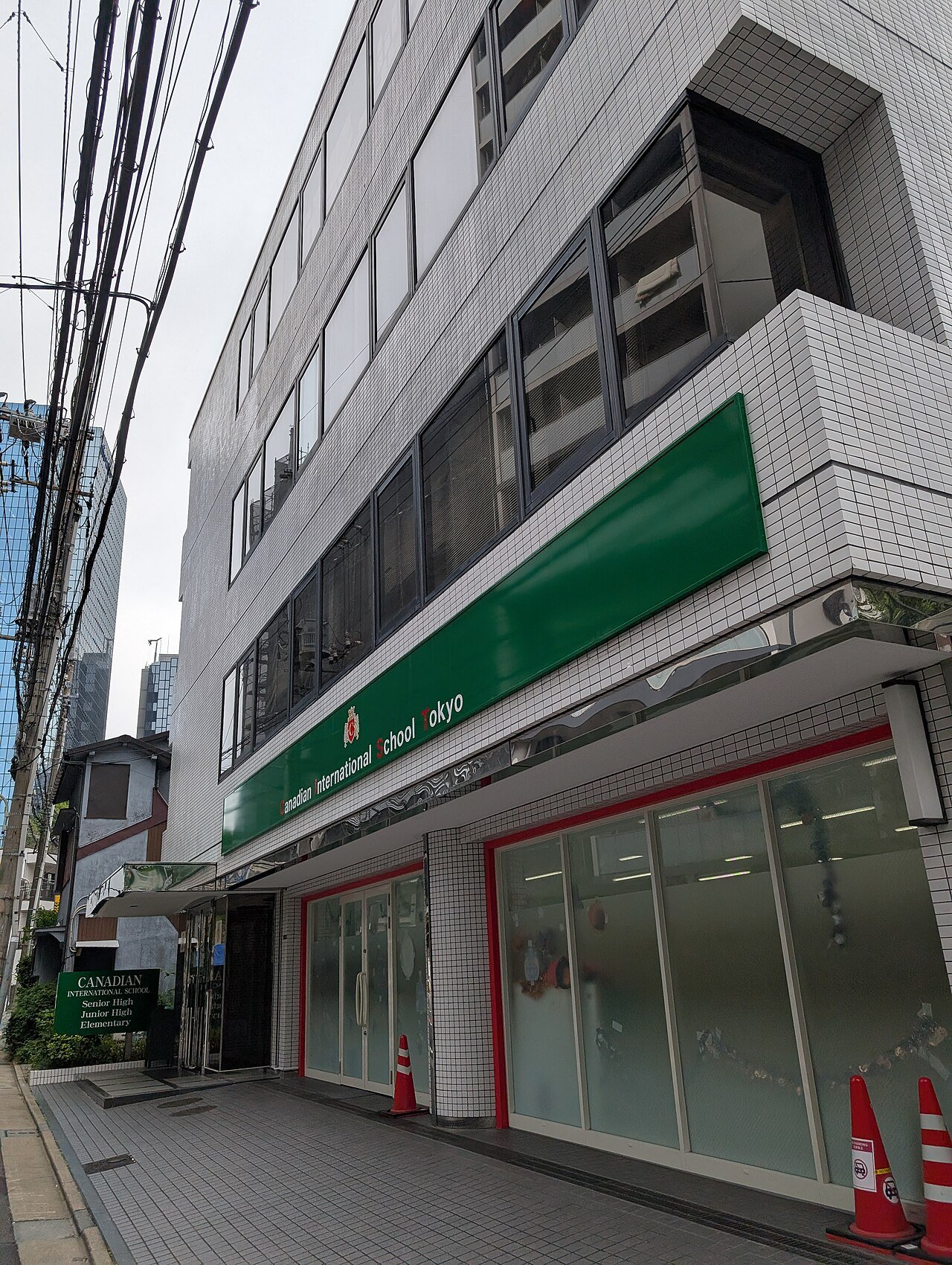
Featured image: Canadian International School 2 by Syced, dedicated to the public domain (CC0), via Wikimedia Commons.