


Part of our guide to international schools in Tokyo. Last verified: November 2026.
Do parents need to speak English for international school in Tokyo? At many schools, yes: at least one parent must be able to communicate with the school in English. Tokyo International School requires this without a translator, the American School in Japan requires one parent who speaks, reads and writes fluent English, and Nishimachi, Yoyogi International School and Christian Academy in Japan also ask for it. Other schools don’t state a parent-English rule in their published requirements, and bilingual schools such as NewIS teach in English and Japanese. The rule exists because meetings, reports and newsletters are in English, and schools want parents to be able to support learning.
Parent English requirements by school
| School | What the school says |
|---|---|
| Tokyo International School | At least one parent must communicate with the school in English without a translator |
| American School in Japan | All applicants must have one parent who speaks, reads and writes fluent English |
| Nishimachi International School | One or both parents should be able to communicate with the school in English |
| Yoyogi International School | At least one parent must be able to communicate with the school in English |
| Christian Academy in Japan | At least one parent should be able to communicate effectively in English |
| Tokyo International Progressive School | Parent language proficiency is part of the admissions criteria |
| Other schools (BST, St. Mary’s, Seisen, Sacred Heart, KIST, Shinagawa IS and others) | No parent-English rule in the requirements published on the Tokyo government portal; ask the school |
From each school’s profile on the Tokyo Metropolitan Government’s international schools portal and the schools’ own admissions pages.
What “communicate in English” means in practice
- Reading school emails, newsletters, reports and permission forms.
- Taking part in parent–teacher conferences and admissions interviews in English.
- Following school policies on health, safety and emergencies.
- Supporting homework and reading at home, especially in the early grades.
None of the schools above publishes a formal English test for parents; ask the admissions office how they assess it (for example, through the parent interview).
Why it matters most for Japanese families
A parent-English rule affects Japanese-speaking families most. Some schools also weigh other factors: Nishimachi considers nationality balance, and TIS considers class balance, including languages and nationality ratios. ASIJ, for example, lists an applicant’s need for an English-medium education among its admission considerations.
Japanese-national children also face a legal issue: most international schools don’t count as Japanese compulsory education. Read our guide to Japanese children and international schools.
Options if neither parent is confident in English
- Bilingual schools: NewIS teaches in English and Japanese. See our comparison of bilingual and international schools.
- Schools without a stated rule: ask admissions directly how they communicate with families and whether any information is available in Japanese.
- Japanese schools with English or IB programmes, such as Tokyo Metropolitan Kokusai High School or Tokyo Gakugei University International Secondary School.
- Build your English: if one parent is close to the level needed, a few months of focused practice before interviews can help, but be honest with the school.
Tips for the parent interview
- Expect questions about your family’s plans, your child’s previous schooling and why you’re choosing the school.
- Bring the parent who will be the main contact with the school.
- Don’t bring an interpreter if the school requires communication without a translator (TIS says so explicitly).
- Prepare questions of your own; see our admissions requirements comparison.
FAQ
Does my child need to speak English too?
For older grades, usually yes. Nishimachi gives priority to students with grade-level English, and Christian Academy in Japan requires grade-level academic English except in kindergarten and lower elementary. See our admissions requirements comparison.
Is one English-speaking parent enough?
At the schools listed, yes: requirements refer to at least one parent.
Sources and official information
- Tokyo Metropolitan Government — International Schools Portal (admissions requirements for each school)
- The American School in Japan — Admissions guidelines
- Tokyo International School — Admissions
- Nishimachi International School — Admissions criteria
Requirements change. Always confirm with the school. TokyoParents has no commercial relationship with any school listed. See our editorial policy.
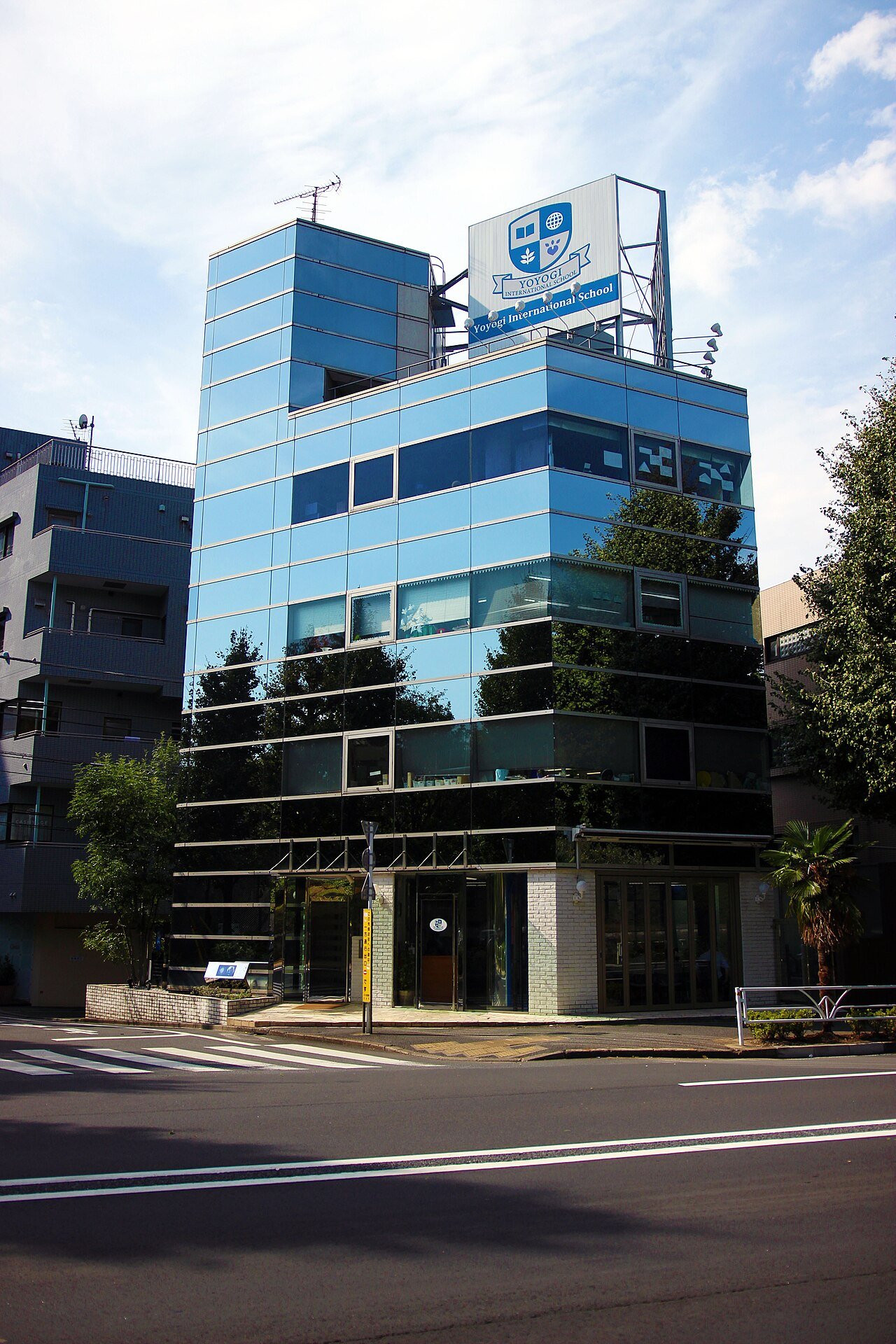
Featured image: Yoyogi International School Yoyogi Campus by Yoyogi International School Tokyo Japan, dedicated to the public domain (CC0), via Wikimedia Commons.