


Part of our guide to international schools in Tokyo. Last verified: November 2026.
What’s the difference between a bilingual school and an international school in Tokyo? Most international schools teach in English, with Japanese as a language subject, and follow a foreign or IB curriculum. Bilingual international schools such as the New International School of Japan (NewIS) teach in both English and Japanese, and Nishimachi gives every student at least one Japanese lesson a day. A third option is Japanese schools with English or IB programmes, such as Tokyo Gakugei University International Secondary School or Tokyo Metropolitan Kokusai High School. These count as regular Japanese schooling and cost far less, but teach mainly in Japanese.
Three options compared
| English-medium international school | Bilingual international school | Japanese school with English/IB programme | |
|---|---|---|---|
| Main teaching language | English | English and Japanese | Japanese (some subjects in English) |
| Examples | ASIJ, BST, St. Mary’s, Seisen, TIS | NewIS; Nishimachi (daily Japanese) | Tokyo Gakugei Univ. International Secondary School; Tokyo Metropolitan Kokusai High School; Tachikawa Kokusai attached elementary school |
| Counts as Japanese compulsory education? | Usually no | Usually no | Yes |
| Typical annual tuition | ¥2.5–3.8 million | ¥2.0–3.1 million | Public schools: no tuition for compulsory years |
| Best for | Families who may move abroad again | Families wanting strong English and Japanese | Families staying in Japan long term |
English-medium international schools
Most of Tokyo’s best-known international schools teach entirely in English and offer Japanese as a language class. They follow American, British, Canadian, French or IB curricula, and are designed for families who may move to another country. See our curriculum comparison.
Bilingual international schools
- New International School of Japan (NewIS, Ikebukuro): a bilingual, multi-age school founded in 2001, teaching in English and Japanese from pre-kindergarten (age 3) to Grade 12. It uses Scotland’s Curriculum for Excellence as its main curriculum resource and is accredited by CIS and MSA-CESS. Tuition (portal): ¥1,960,000 (kindergarten) to ¥2,600,000 (high school), with sibling discounts.
- Nishimachi International School (Moto-Azabu): an English-medium, US Common Core school for Kindergarten to Grade 9, with at least one Japanese lesson every day. Tuition ¥3,129,000.
- Other schools teach significant Japanese: Tokyo West International School in Hachioji teaches in English and Japanese and follows the April–March school year, and K. International School Tokyo teaches in English and Japanese.
Japanese schools with English or IB programmes
- Tokyo Gakugei University International Secondary School (national, Nerima): IB Middle Years Programme since 2010 and IB Diploma since 2015, with a large share of returnee students.
- Tokyo Metropolitan Kokusai High School (public, Meguro): authorised as an IB World School in 2015, offering the IB Diploma.
- Tachikawa Kokusai Secondary School attached elementary school (public, Tachikawa): opened in April 2022 as Japan’s first public elementary-to-high-school programme, with English taught as a subject from Grade 1. English level isn’t tested on entry.
Entry is usually by selection, with separate routes for returnees at some schools; check each school’s admissions guidelines.
The legal difference that matters
Most international schools, bilingual or not, aren’t “Article 1” schools under Japan’s School Education Act. For Japanese-national children, attending them doesn’t satisfy compulsory education, and moving into a Japanese public junior high afterwards generally isn’t allowed. Japanese schools with English and IB programmes don’t have this problem. Read more in our guide to compulsory education and international schools.
How to choose
- Will you leave Japan? An English-medium international school makes moving schools abroad easiest.
- Staying long term with a Japanese parent? A bilingual school or a Japanese school with an English or IB programme keeps Japanese strong and keeps more doors open.
- Which language does your child need to read and write at a native level? Bilingual programmes aim for both, but take time; ask schools how they assess progress in each language.
- University plans: IB Diploma graduates can apply to universities in Japan and abroad. See our international high school guide.
- Budget: public Japanese schools charge no tuition for the compulsory years; international schools cost ¥2–4 million a year. See our fees comparison.
FAQ
Is NewIS a bilingual school?
Yes. NewIS describes itself as a bilingual, multi-age school teaching in English and Japanese.
Are there public IB schools in Tokyo?
Yes. Tokyo Metropolitan Kokusai High School offers the IB Diploma, and Tokyo Gakugei University International Secondary School (a national school) offers the MYP and Diploma.
Sources and official information
- Tokyo Metropolitan Government — International Schools Portal: New International School of Japan
- Tokyo Gakugei University International Secondary School — School overview (Japanese)
- Tokyo Metropolitan Kokusai High School — School pamphlet (Japanese)
- Tachikawa Kokusai attached elementary school — Admissions FAQ (Japanese)
- Ministry of Education (MEXT) — International schools and the schooling obligation (Japanese)
School details change. Always confirm with the school. TokyoParents has no commercial relationship with any school listed. See our editorial policy.
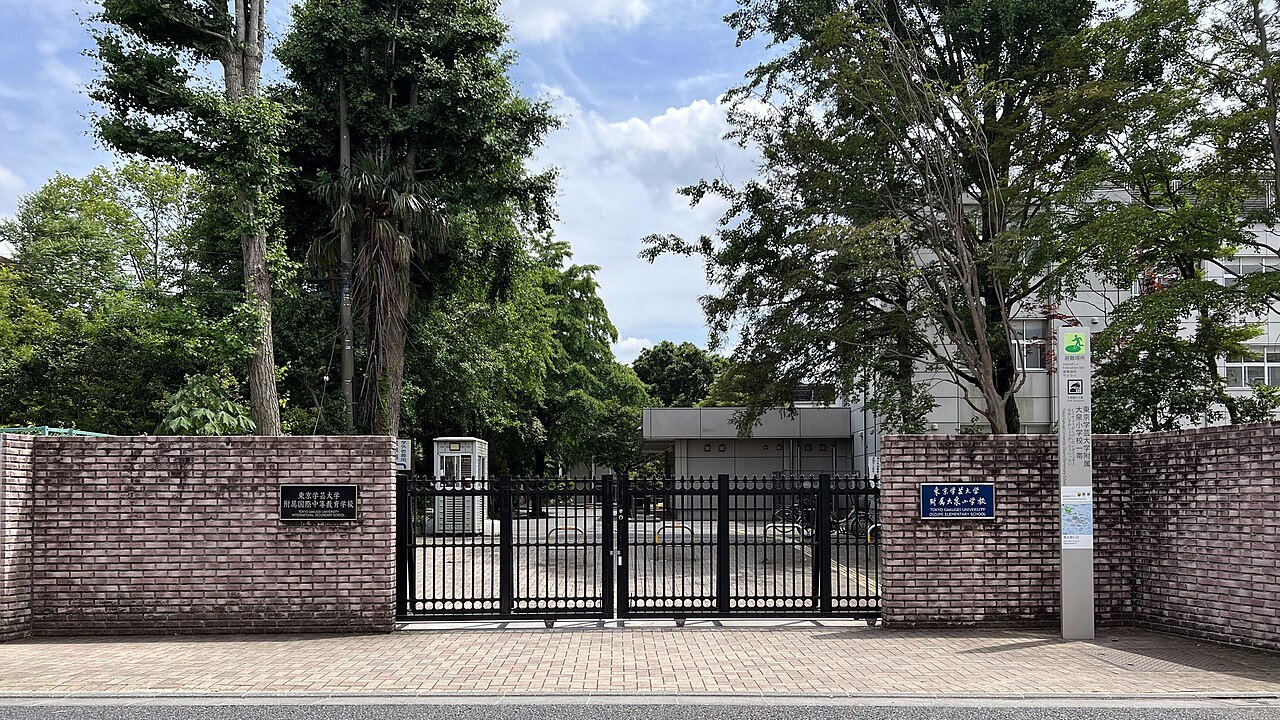
Featured image: Tokyo Gakugei University Oizumi campus by Asanagi, dedicated to the public domain (CC0), via Wikimedia Commons.