

Part of our Education & Childcare in Tokyo guide. Last reviewed: October 2026.
Tokyo’s public elementary schools are free, local and widely respected — and they’re open to foreign children. Many international families choose them for cost, community, or to give their children fluent Japanese. But for foreign nationals, enrollment isn’t automatic in the same way it is for Japanese children, and autumn is when the key steps for April entry happen. Here’s how it works.
Can foreign children attend?
Yes. Japanese public elementary and junior high schools accept foreign children who wish to enroll, on the same basis as Japanese children, with no tuition. Unlike Japanese nationals, foreign children aren’t legally obliged to attend Japanese school — which is why wards often ask foreign families to apply rather than enrolling them automatically.
Children who hold Japanese nationality (including dual nationals) fall under compulsory education rules. If that applies to your child and you plan an international school, ask the ward how that is handled.
When does school start?
The Japanese school year starts in April. Children enter first grade in the April after they turn six (more precisely, children who turn six by April 1 start that April). Grade placement for older children is generally by age, not by language level. Children who arrive mid-year can usually join at any time.
Step by step: enrolling for April
- Register your address at the ward office. Your designated school is set by your address.
- Watch for the school-entry notice. In autumn, wards send information to families of children starting school the following April. For foreign children, some wards send an application form or ask you to apply online (for example, Kita requires an online application for foreign children wishing to attend a ward school). If you’ve heard nothing by October, contact the ward’s board of education.
- Attend the school-entry health check (就学時健康診断, shūgakuji kenkō shindan), held at the designated school. In Setagaya, for example, these run from mid-October to late November. Notices typically arrive in late September or October.
- Receive your school designation (shūgaku tsūchisho), usually in winter.
- Attend the new-parent briefing at the school, typically in late winter, where you’ll get the supply list and schedule.
Some wards let you request an adjacent school instead of the designated one. Ask about the deadline if this matters to you.
Mid-year enrollment
If you arrive during the school year, go to the ward’s board of education (often in the ward office) after registering your address. Bring Residence Cards for parent and child, and ask for the enrollment guide for foreign children — many wards have one in English. The school will usually arrange a meeting before your child starts.
What it costs
- Tuition and textbooks: free.
- School lunch: Tokyo’s wards have moved to make public elementary school lunches free. Check your ward’s current policy.
- Supplies: you’ll buy items such as a school backpack (randoseru, optional at some schools), indoor shoes, a disaster hood, and later a recorder, keyboard harmonica, paint and calligraphy sets.
- Other costs: trips, materials and PTA fees are typically modest.
After school: book the after-school club (gakudō) early
Elementary school days are shorter than daycare days, especially in first grade. If both parents work, you’ll probably need a gakudō (学童クラブ, after-school club). Applications for April are separate from school enrollment and timing varies widely: some areas take applications in the autumn, others in January (Chiyoda’s first round for April 2026 ran in January). Check your ward’s gakudō page now so you don’t miss it.
Language support
Classes are taught in Japanese. Support for children still learning Japanese varies by ward and school: some offer dedicated Japanese-language classes or extra instruction, others rely on in-class support and interpreters for meetings. Ask the ward what’s available. Children often become conversational within months, but academic Japanese takes longer, and parents should expect plenty of Japanese-language handouts. Our guide to raising bicultural kids covers keeping your home language strong alongside Japanese school.
What school life looks like
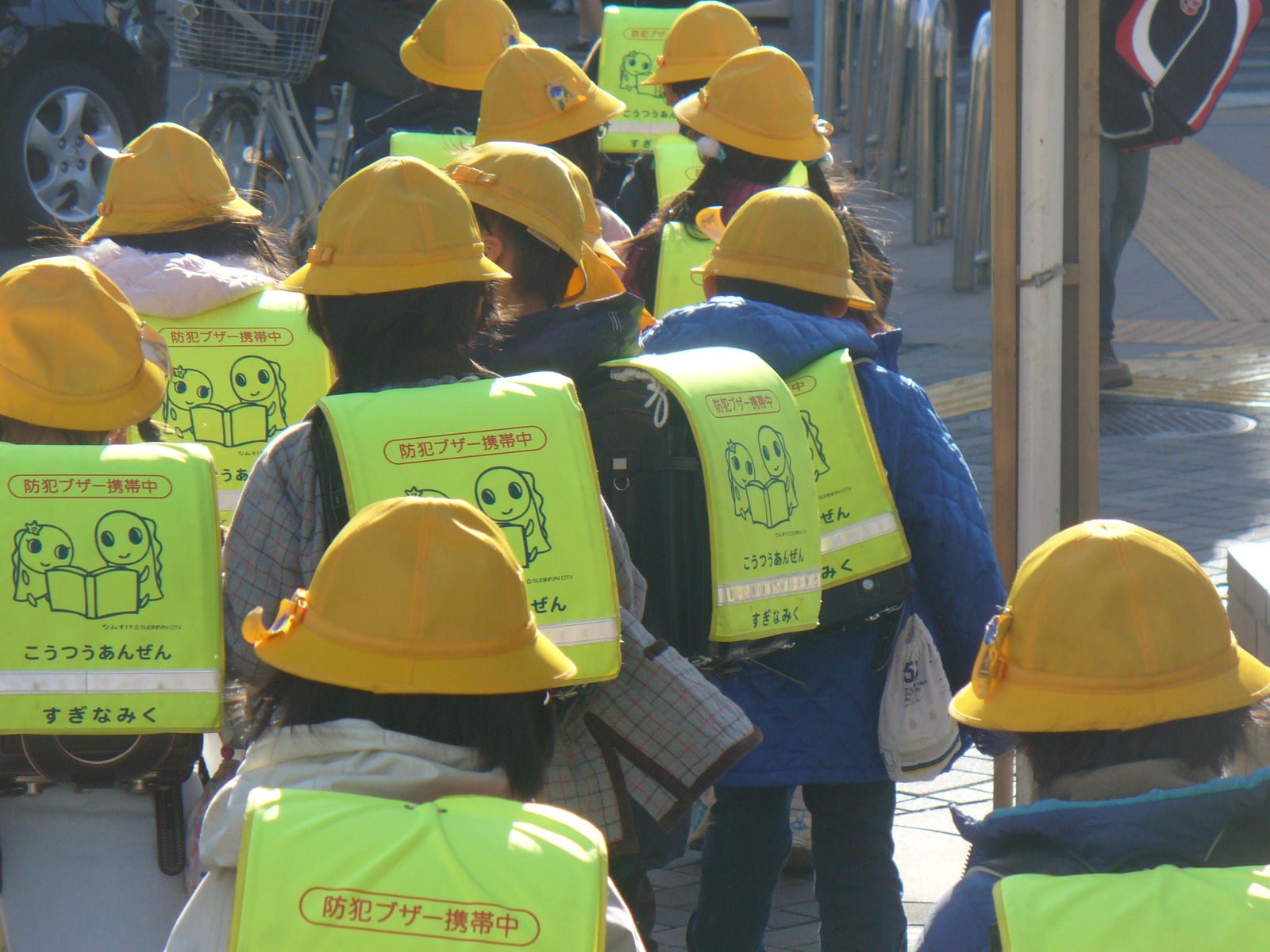
- Walking to school. Even first graders typically walk to school without parents, often in groups.
- Cleaning and lunch duty. Children serve lunch and clean their classrooms — part of the curriculum.
- Events. Sports day, open classes and performances, often on weekends.
- Parent involvement. PTA roles and regular home-school communication. Ask other parents how the PTA works at your school.
- Disaster drills. Schools hold regular drills, including practice for handing children over to parents after a major earthquake.
FAQ
Can my child start Japanese school without speaking Japanese?
Yes. Many children do. Expect a demanding first few months; ask the ward about language support, and keep communication with the teacher open.
Can we switch to an international school later?
Yes, though moving between systems later can be harder academically and linguistically. Plan around how long you expect to stay in Japan.
What if we’re moving to Tokyo just before April?
Contact the board of education in the ward you’re moving to as early as possible. You’ll formally enroll after registering your address.
Sources and official information
- Tokyo Metropolitan Board of Education — Enrollment in public elementary and junior high schools (English)
- Setagaya City — For foreign children wishing to attend ward schools (Japanese)
- Meguro City — School-entry health check (Japanese)
- Chiyoda City — After-school club enrollment (Japanese)
Procedures vary by ward. Confirm with your ward’s board of education. See our editorial policy.
Featured image: Schoolkids wearing hats and randoseru in Kugayama, Japan; January 2010 by Mr. Brian, licensed under CC BY 2.0, via Wikimedia Commons.