

Indoor Activities for Kids in Tokyo help families manage rainy season, summer heat, winter cold and high-energy weekends. The best plan is not simply the most famous attraction. It matches the child’s age, sensory needs, interests, travel tolerance and the family’s budget.
Indoor Activities for Kids in Tokyo: 15 flexible ideas
Use this list as activity types, then verify a suitable venue’s official age rules, opening hours, reservation system and current fees. Popular sites may sell out, close for maintenance or restrict re-entry.
1. Hands-on science museums
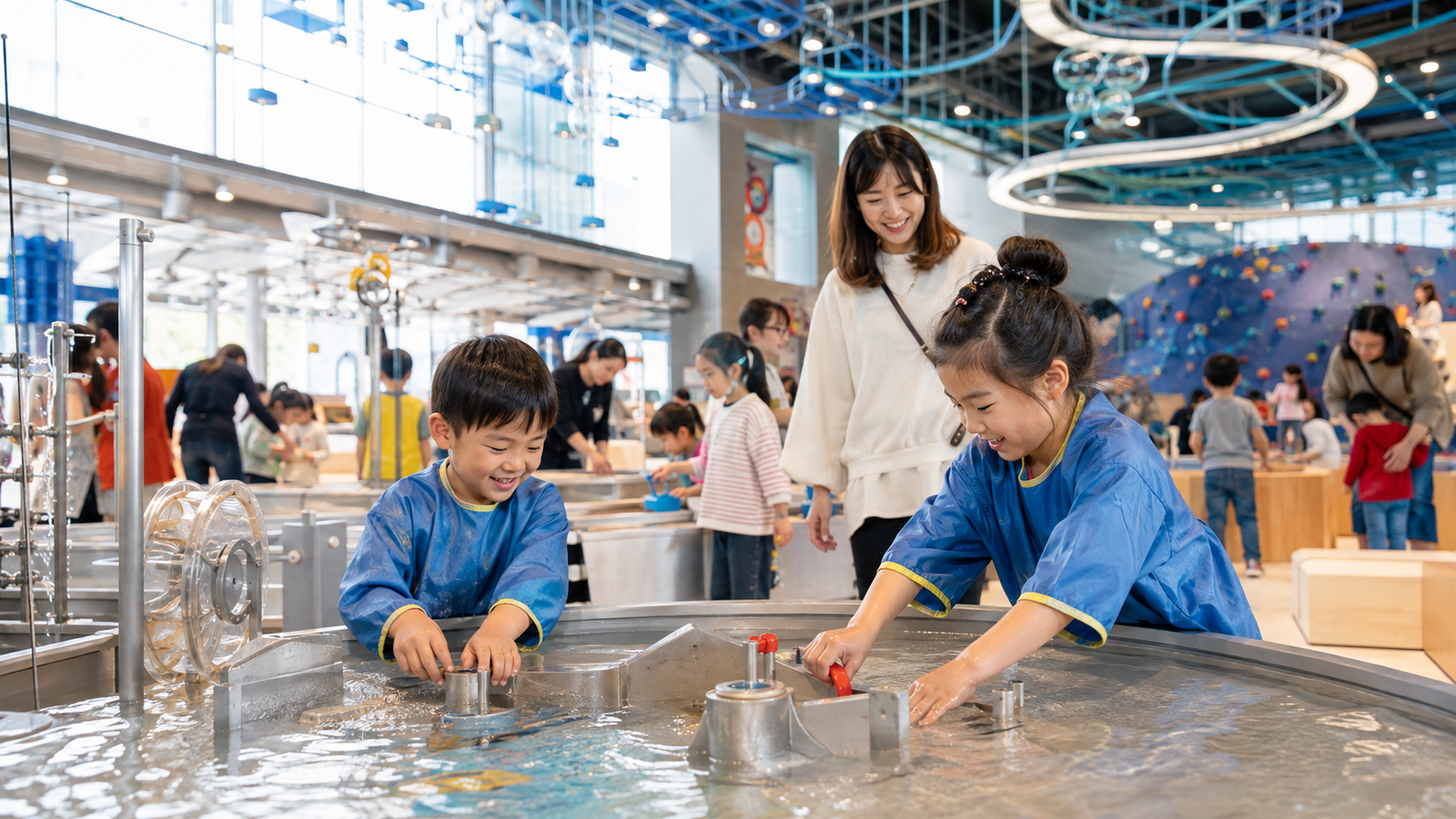
Interactive exhibits turn a difficult-weather day into learning through movement, experimentation and conversation. Check whether explanations or workshops are available in English and whether younger children have a dedicated area.
2. Children’s museums
Purpose-built play, role-play and discovery areas work well for early childhood. Look for timed entry, stroller rules, nursing rooms and quiet corners.
3. Indoor play centres
Climbing, soft play and imaginative zones allow physical activity. Confirm socks, clothing, adult-supervision and height requirements before traveling.
4. Aquariums
Aquariums combine calm observation with science and storytelling. Avoid rushing every exhibit. Choose a few animals, sketch them and let children ask questions.
5. Railway and transport museums
Train-loving children can explore vehicles, models and simulators. Reservation or lottery rules may apply to popular experiences.
6. Art museums with family programmes
Choose a short gallery route and pair it with drawing or a child-focused workshop. Review photography and touching rules in advance.
7. Libraries and story sessions
Libraries provide a low-cost reset day. Search for multilingual books, children’s rooms and scheduled storytelling. Tokyo government coverage of the Tokyo Children’s Library illustrates how specialist libraries can nurture reading.
8. Indoor climbing
Age-appropriate bouldering or climbing builds coordination and confidence. Verify minimum age, equipment, instruction and guardian requirements.
9. Trampoline and movement venues
These are useful for high-energy children but require careful adherence to safety briefings, age zones and health restrictions.
10. Craft workshops
Pottery, paper craft, woodwork and seasonal making provide a tangible result. Confirm language, tool use and whether materials are included.
11. Cooking classes
Child-friendly cooking strengthens practical skills and food curiosity. Disclose allergies before booking and ask how heat and knives are managed.
12. Miniature and model worlds
Detailed scenes support observation and imaginative storytelling. Tokyo has large indoor miniature attractions, but families should verify current exhibits and ticket conditions directly.
13. Disaster-preparedness centres
Some public learning facilities teach earthquake, fire and emergency awareness through simulations. The Tokyo Fire Department’s educational facilities can make safety memorable; check age suitability because some experiences may feel intense.
14. Community centres and jidokan
Local children’s halls and community facilities may offer playrooms, clubs and seasonal programmes. Access and registration differ, so consult the ward.
15. Home activity challenges
A themed afternoon can combine building, drawing, cooking and movement without transport costs. Rotate stations every twenty to thirty minutes and finish with child-led reflection.
Choose by age and energy
| Need | Good starting options |
|---|---|
| Toddler movement | Children’s museum, soft play, jidokan |
| School-age curiosity | Science, transport, craft, disaster learning |
| Low-energy day | Library, aquarium, art or miniature worlds |
| High-energy day | Climbing, trampoline or movement venue |
| Low budget | Library, ward facility, home challenge |
Plan the visit in six checks
- Check the official site on the day for closures.
- Confirm advance tickets or timed entry.
- Review child age, height and adult ratios.
- Locate meals, water, toilets and nursing space.
- Set a total budget including transport and extras.
- Choose an exit time before children become exhausted.
Make the outing educational without pressure
Ask one question before the visit, let the child choose one exhibit and discuss one discovery afterward. This light structure improves memory without turning family time into school. Take fewer photos and spend more time observing together.
For outdoor alternatives when the weather improves, use our free family activities in Tokyo guide. The Tokyo Metropolitan Government also highlights family activities in the Tama region.
Accessibility and sensory planning
Contact the venue about elevators, stroller access, accessible toilets, lighting, sound, queues, quiet space and companion arrangements. Visit at opening or on a weekday when possible. Bring headphones, a familiar snack where permitted and a simple visual schedule for children who benefit from predictability.
Frequently asked questions
Do indoor attractions need reservations?
Many do, especially on weekends and school holidays. Always check the venue’s official booking page.
What is a good backup plan?
Choose one nearby library, ward children’s facility or home activity in case tickets, illness or transport disrupt the main plan.
How can families control cost?
Set a transport-and-entry ceiling, bring allowed food and water, avoid unplanned paid add-ons and alternate commercial venues with free community options.
Important: fees, eligibility, opening hours and application procedures can change. Confirm the latest information with the school, provider, ward office or official service before making a decision.