


Part of our guide to international schools in Tokyo. Last verified: November 2026.
How do international preschools work in Tokyo? There are two main kinds. International-school kindergartens are the early-years sections of schools such as the American School in Japan, The British School in Tokyo, Seisen and Sacred Heart; they usually start at age 3 and cost about ¥2.1 million to ¥3.1 million a year, but give your child a path into the main school. Standalone international preschools are English-language nurseries that usually take younger children and are often registered as unlicensed childcare facilities. For children aged 3 to 5, the national free-childcare scheme can pay up to ¥40,300 a month towards an eligible unlicensed facility (up from ¥37,000 from October 1, 2026), if your family is certified as needing childcare.
International-school kindergartens: starting ages and fees
| School | Location | Youngest entry | Kindergarten tuition | Source |
|---|---|---|---|---|
| Aoba-Japan International School | Meguro campus | From 18 months | ¥2,098,000–¥2,332,000 | Portal |
| American School in Japan — Early Learning Center | Roppongi | Nursery, age 3 before September 1 | Kindergarten ¥3,143,000 | Portal / school |
| The British School in Tokyo | Azabudai Hills | Nursery, age 3 | ¥2,960,000 (Primary, incl. Nursery and Reception) | School (2026–27) |
| International School of the Sacred Heart | Hiroo | K3 (age 3 by September 1); boys accepted ages 3–5 | ¥2,560,000 (K3–K4) | School (2026–27) |
| Seisen International School | Yoga, Setagaya | Coeducational Montessori kindergarten | Half-day ¥1,500,000; full-day ¥2,500,000 | School (2026–27) |
| K. International School Tokyo | Shirakawa, Koto | K1 (July 31 cut-off) | ¥3,020,000 (K1–K3) | School (2026–27) |
| Shinagawa International School | Shinagawa | Early Years Programme | ¥2,575,000 | Portal |
| Yoyogi International School | Shibuya | Kindergarten | ¥2,700,000 | Portal |
| KA International School | Meguro | Pre-kindergarten | ¥2,244,358 | Portal |
| Christian Academy in Japan | Higashikurume | Kindergarten | ¥1,950,000 | Portal |
| Tokyo West International School | Hachioji | Kindergarten | ¥1,140,000 | Portal |
| Tokyo International School | Mita, Minato | Kindergarten, age 5 by August 31 | ¥3,100,000 | School (2026–27) |
“Portal” figures come from the Tokyo Metropolitan Government’s international schools portal, which notes that some fees may not be listed. One-time entry fees (often ¥0.8–1.4 million) usually apply on top. See our fees comparison.
Why start at an international-school kindergarten?
- A route into the main school: kindergarten children generally move up into Grade 1 at the same school, which matters where Grade 1 is oversubscribed. Ask each school whether moving up is automatic.
- Entry years are competitive: some schools have published deadlines a year ahead. Sacred Heart’s Kindergarten 5 priority period for August 2027 ends on November 20, 2026, and its K3–K4 first-round cut-off is December 18. See our admissions calendar.
- Birthday cut-offs differ: September 1 at ASIJ, Sacred Heart and Seisen; August 31 at TIS and Nishimachi; July 31 at KIST. The same child can fall into different year groups.
- Toilet training: Sacred Heart requires kindergarten children to be fully toilet trained, day and night, by August 1. Ask each school about its policy.
Standalone international preschools
Many English-language preschools in Tokyo aren’t part of a K–12 school. Many take children younger than 3, some run longer days than school kindergartens, and fees vary widely. Many are registered as unlicensed childcare facilities (ninkagai hoiku shisetsu), not licensed nurseries (hoikuen) or licensed kindergartens. Before enrolling, ask:
- Is the preschool registered with the Tokyo Metropolitan Government as a childcare facility, and does it meet the national inspection standards?
- Is it on your ward’s list of facilities eligible for the free-childcare subsidy?
- Which elementary schools do graduates go on to, and does it help with international-school applications?
- What are the hours, teacher-to-child ratios and teachers’ qualifications?
- What extra fees apply (registration, materials, meals, buses, summer programmes)?
The free-childcare subsidy: up to ¥40,300 a month
Japan’s free early childhood education and care scheme (yōji kyōiku hoiku mushōka) can help with preschool fees:
- Who qualifies: children aged 3 to 5 (in the 3-year-old to 5-year-old classes) whose family is certified as needing childcare, for example because both parents work (usually 12 hours or more a week, depending on the municipality), are studying or are job-hunting. Children aged 0 to 2 qualify only in households exempt from municipal resident tax.
- How much: from October 1, 2026, up to ¥40,300 a month for ages 3–5 at eligible unlicensed facilities (previously ¥37,000), and up to ¥45,700 for eligible 0–2-year-olds (previously ¥42,000). The new caps apply to use from October 1 onwards.
- What it doesn’t cover: meals, transport and event fees.
- Which facilities: unlicensed facilities that are registered and meet national standards. Many international preschools are eligible, but not all; ask the preschool and your ward.
- How to apply: apply to your ward or city office for certification (shisetsu-tō riyō kyūfu nintei) before you start. Benefits don’t cover months before your application is accepted. Some municipalities want applications by the 20th of the month before you start, and many pay by reimbursement, so you pay the full fee first and claim it back.
- Ward top-ups: some wards add their own subsidy for unlicensed childcare. Meguro, for example, adjusted its ward subsidy so the combined maximum stayed the same when the national cap rose.
Also looking at Japanese daycare? See our April 2027 hoikuen deadlines.
FAQ
Do international-school kindergartens qualify for the free-childcare subsidy?
It depends on how the school is registered. Ask the school and your ward office before you assume you’ll receive it.
What’s the youngest age for an international school in Tokyo?
Aoba-Japan’s Meguro campus takes children from 18 months. Most international-school kindergartens start at age 3, and Tokyo International School at age 5.
Is half-day kindergarten cheaper?
Yes, where offered. Seisen’s half-day kindergarten is ¥1,500,000 a year, against ¥2,500,000 for full-day.
Sources and official information
- Meguro City — Free childcare for unlicensed childcare facilities, including the October 2026 cap increase (Japanese)
- Inagi City — Benefits for the use of facilities (English)
- Tokyo Metropolitan Government — International Schools Portal: kindergartens
- International School of the Sacred Heart — Admission process
- The American School in Japan — Admissions guidelines
Subsidy rules vary by municipality. Confirm eligibility with your ward or city office. TokyoParents has no commercial relationship with any school or preschool listed. See our editorial policy.
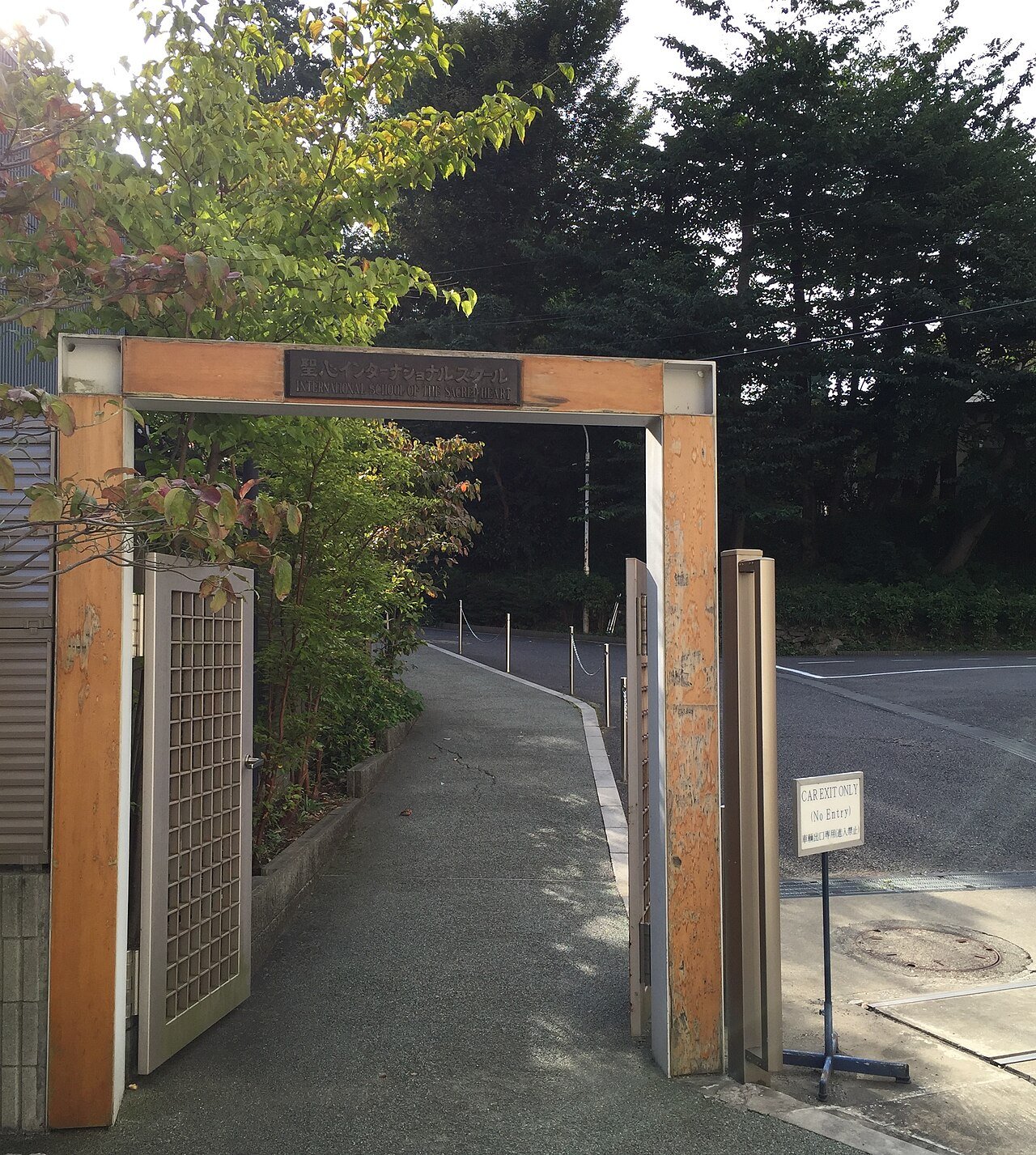
Featured image: Hiroo-siis by Ahgwp7m, licensed under CC BY-SA 4.0, via Wikimedia Commons.