

Part of our Healthcare for Families in Tokyo guide. Last reviewed: October 2026.
Your first Tokyo winter with a child in daycare can feel like a rolling series of phone calls: a fever at 11 a.m., a pickup request, then a question about when your child is allowed back. Japanese daycares (hoikuen) follow national guidance on infectious illness, and the rules are stricter and more formal than many parents expect. Knowing them in advance makes sick days much less stressful.
This guide explains how return-to-daycare rules work, what common illnesses usually require, and the options working parents have. Your center and ward have the final say, so always check their specific rules and forms.
Where the rules come from
Daycares base their policies on the national Guidelines for Infection Control in Childcare Centers, now published by the Children and Families Agency, together with the School Health and Safety Act for some illnesses. The guidelines set out typical periods a child should stay home and conditions for returning. Wards and individual centers then decide the details, including which paperwork is required.
One principle runs through everything: the timeframes are a minimum. A child also needs to be well enough in general — eating, sleeping and able to cope with a normal day — before going back.
The fever phone call
Most centers ask parents to pick up a child who develops a fever during the day, commonly once it reaches around 37.5°C, or who is vomiting, has diarrhoea or seems unwell. Many also ask that a child be fever-free for a period (often 24 hours) before coming back after a fever, even without a diagnosis. Each center sets its own thresholds, so read your center’s handbook.
Because these calls come at short notice, agree in advance which parent (or which backup person) will respond.
Typical return guidelines for common illnesses
Based on the national guidelines. Your center may apply them differently — always follow the center’s and your doctor’s instructions.
- Influenza: at least 5 days after symptoms started and 2 days after the fever has gone (3 days for preschool-age children).
- COVID-19: at least 5 days after symptoms started and 1 day after symptoms have improved.
- RSV: once respiratory symptoms have settled and the child is generally well.
- Norovirus and other stomach bugs: once vomiting and diarrhoea have stopped and the child can eat normally.
- Hand, foot and mouth disease and herpangina: once the fever has gone, the child can eat normally and is generally well.
- Pharyngoconjunctival fever (adenovirus, “pool fever”): 2 days after the main symptoms have gone.
- Strep throat: after antibiotics have been taken for the period the doctor advises (typically 24–48 hours) and the child is well.
- Chickenpox: once all spots have crusted over.
- Mumps: 5 days after the swelling appeared and the child is generally well.
- Measles: 3 days after the fever has gone.
- Rubella: once the rash has gone.
- Whooping cough: once the characteristic cough has stopped, or after 5 days of appropriate antibiotics.
How days are counted matters: generally the day symptoms started or the fever went down is “day 0”, and counting begins the next day. Ask your doctor or center if you’re unsure.
Paperwork: doctor’s opinion vs parent’s notification
For many infectious illnesses, centers ask for a form before your child returns. There are two common types:
- Doctor’s opinion form (意見書, ikensho): completed by the doctor, confirming the child can return. Usually required for the more serious or highly contagious illnesses. Clinics may charge a document fee.
- Parent’s notification (登園届, tōen todoke): completed by you after your child has seen a doctor, recording the diagnosis and the doctor’s advice.
Which illnesses need which form varies by ward and center — for example, some areas use a parent’s notification for influenza while others require a doctor’s form. Download your ward’s forms in advance (several central wards, including Chuo, publish them online) and bring the right one to the doctor so you don’t need a second visit.
Sick-child care: your backup plan
Many wards subsidise sick-child care (病児保育, byōji hoiku) and recovering-child care (病後児保育), usually in rooms attached to clinics, for children who are too unwell for daycare but don’t need hospital care.
- Register before you need it. Some wards require advance registration. Setagaya, for example, requires families to register with the ward’s childcare section before using its sick-child care rooms.
- A doctor’s form is usually needed on the day. Minato, for example, asks parents to have a doctor complete a form before using a sick-child care room, then book a place.
- Fees are modest. Ward-subsidised rooms typically charge around 2,000 yen per day for residents, with exemptions for some households — check your ward’s current fees.
- Places are limited and fill early on winter mornings, so register with more than one room if you can, and book as soon as you know you’ll need it.
Some wards also subsidise home-visit sick-child care (a sitter who comes to your home), and private services exist at higher cost.
Leave from work: the child nursing leave
Under Japan’s Child Care and Family Care Leave Act, employees can take leave to care for a sick child (now called 子の看護等休暇, child nursing leave). From April 2025 the rules were expanded:
- It now covers children up to the end of the third year of elementary school (previously until school entry).
- Reasons now include class or daycare closures due to infectious disease outbreaks, and entrance and graduation ceremonies, as well as illness, injury, vaccinations and health checkups.
- The usual entitlement is 5 days a year for one child and 10 days for two or more, which can be taken in hourly or daily units.
- Whether the leave is paid depends on your employer.
Check your company’s rules — and if you work for a foreign company, ask HR how these Japanese entitlements are applied.
A sick-day survival checklist
- Read your center’s illness policy and save your ward’s ikensho and tōen todoke forms.
- Register for sick-child care in your ward before winter.
- Identify your pediatrician and your ward’s holiday clinics.
- Keep the child’s insurance card and child medical subsidy certificate somewhere you can grab them.
- Agree a pickup rota between parents and any backup carers.
- Keep vaccinations up to date, including the seasonal flu vaccine.
FAQ
My child has a cold but no fever. Can they go to daycare?
Usually yes, if they’re otherwise well. Centers mainly act on fever, vomiting, diarrhoea, suspected infectious illness, or a child who can’t cope with the day.
Do I need a doctor’s form for every illness?
No. Forms are typically required only for specified infectious diseases. Your center’s handbook lists which ones.
Can a sibling go to daycare if the other child has flu?
Generally a healthy sibling can attend, but centers may ask you to watch for symptoms closely. Ask your center about its policy.
Sources and official information
- Children and Families Agency — Guidelines for Infection Control in Childcare Centers (2018 revision, partially revised 2023), Japanese PDF
- Japan Pediatric Society — Infectious diseases to prevent in schools, kindergartens and daycare (April 2025 revision), Japanese PDF
- Chuo City — Doctor’s opinion and return notification forms (Japanese)
- Setagaya City — Sick-child and recovering-child care (Japanese)
- Ministry of Health, Labour and Welfare — 2025 amendments to the Child Care and Family Care Leave Act
This guide is general information, not medical advice. Follow your doctor’s and daycare’s instructions. See our editorial policy.
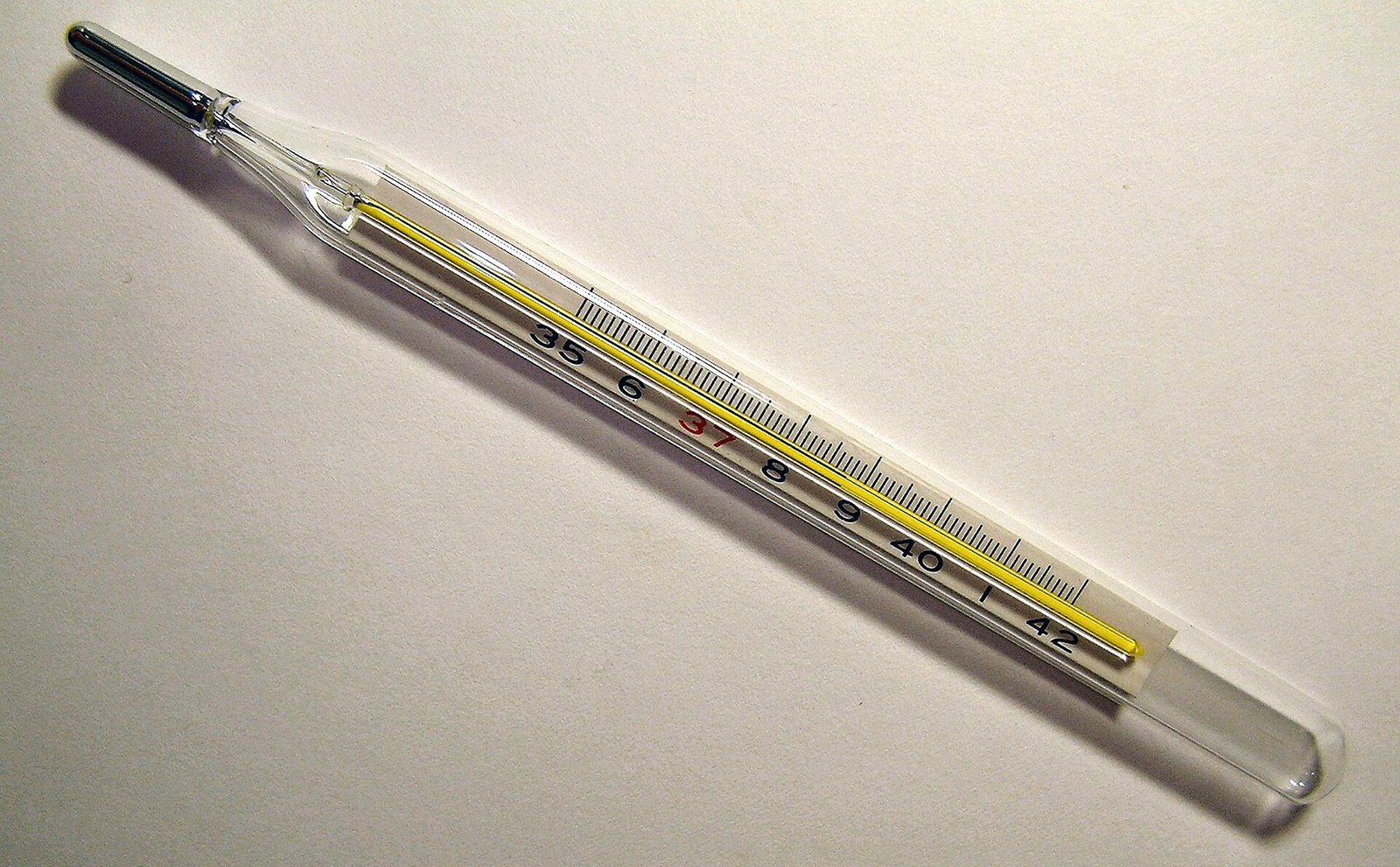
Featured image: Clinical thermometer 38.7 by Menchi, licensed under CC BY-SA 3.0, via Wikimedia Commons.