


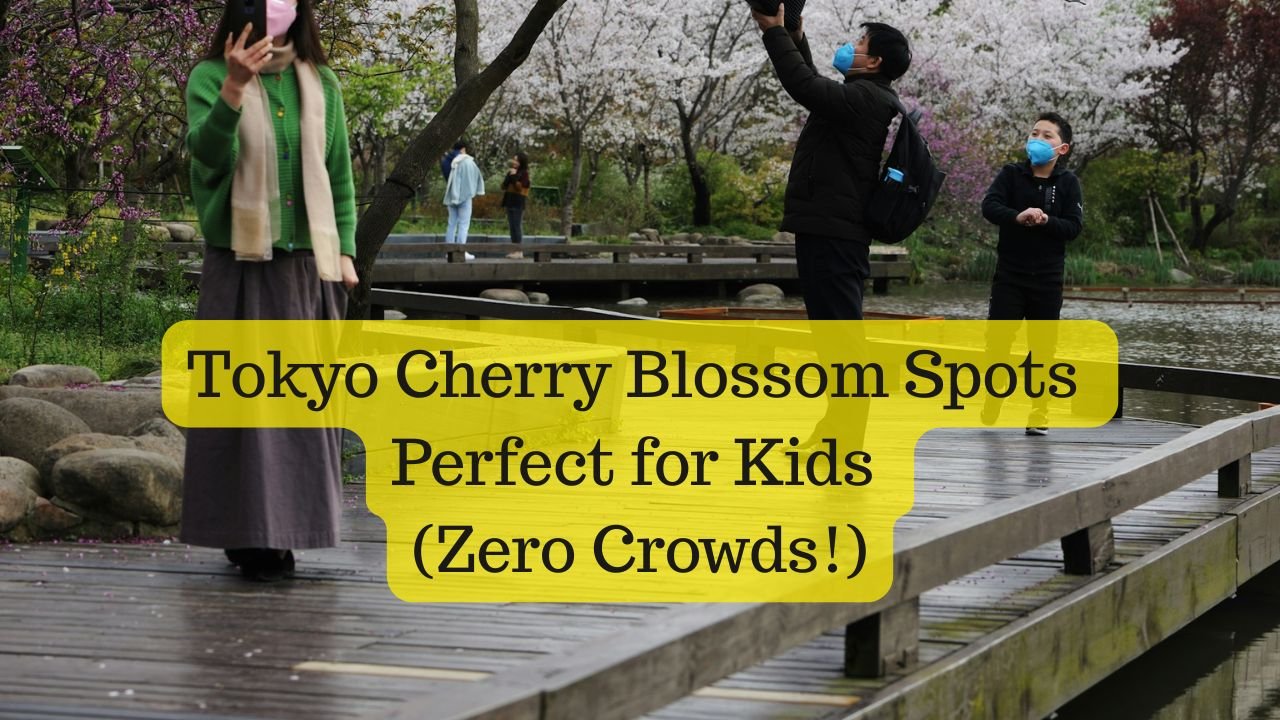
Why Low-Crowd Hanami Matters for Families
Cherry blossom season in Tokyo is magical, but for parents, the reality can be overwhelming: packed parks, pushing strollers through crowds, kids needing the toilet at the worst time, and anxious thoughts about getting separated.
Many famous spots like Ueno Park or Meguro River are beautiful, but not always child-friendly when they’re packed shoulder to shoulder.
The good news: Tokyo is full of quieter, lesser-known cherry blossom spots where families can enjoy hanami (flower viewing) without the stress.
These places may not be on tourist maps, but they’re wonderful for kids who need space to run, nap in strollers, or just enjoy dropping petals into a stream.
This guide focuses on more relaxed, family-friendly sakura spots around Tokyo, based on what parents actually need: easy access, bathrooms, space, safety, and a calmer atmosphere.
When to Go: Timing Your Family Hanami
Even low-key spots can get busy on weekends, so timing makes a huge difference.
- Go early in the morning: Between 7:00–9:00 is perfect for toddlers and jet-lagged kids, and parks are almost empty.
- Choose weekdays: Avoid weekend peak; Monday–Thursday mornings are usually the calmest.
- Watch the weather: Overcast weekdays are often blissfully quiet, and kids don’t mind a gray sky if there are petals to chase.
- Aim for just before full bloom: A few days before “mankai” (full bloom) is often less crowded but still beautiful.
Kid-Friendly, Low-Crowd Sakura Spots by Area
1. Residential Riverside Paths in Setagaya (Sangenjaya / Shimokitazawa Area)
Setagaya is full of quiet residential streets where cherry trees line small rivers and pedestrian paths. Unlike the famous Meguro River, these waterways are low-key and local.
Look for narrow paths where local kids ride bikes and grandparents walk tiny dogs. You’ll often find:
- Flat paths: Great for strollers and beginner balance bikes.
- Benches under the trees: Ideal for nursing, snack breaks, or just watching petals fall.
- Playgrounds nearby: Many tiny parks are tucked just off the path.
Parenting tip: In these residential hanami spots, keep noise and litter in mind. Bring a small trash bag and encourage your kids to say “konnichiwa” to neighbors. It’s a gentle way to model respect for Japanese community life.
2. Small Local Parks in Sumida Ward (Away from the Skytree Crowds)
Sumida Park near Tokyo Skytree can be crowded, but the backstreets of Sumida Ward hide many tiny, peaceful parks with surprisingly lovely cherry trees.
These spots are used mainly by families from the neighborhood, not tourists.
Why they’re great for kids:
- Compact, fenced spaces: Easier to watch multiple kids at once.
- Simple play equipment: Slides and swings under the blossoms feel magical without the chaos of a huge playground.
- Convenient facilities: Most parks have nearby vending machines and toilets in the vicinity.
These are places where you sit on a bench, watch your child dig in the sandbox while petals fall in their hair, and feel like you’re part of local Tokyo life, not just visiting a landmark.
3. Neighborhood Shrines with Sakura Trees
Many small Shinto shrines across Tokyo have one or two old cherry trees in their grounds. While not “hanami famous,” they’re serene, respectful places for a quiet family visit.
Typical experience:
- Walk through the torii gate under soft pink blossoms.
- Wash hands at the chozuya (purification fountain) – kids love this ritual.
- Listen to birds instead of crowds and loudspeakers.
Cultural tip: Teach your child a simple shrine routine: bow once at the gate, toss a coin, bow twice, clap twice, then bow again. It’s a gentle way to connect them with Japanese traditions while they admire the flowers.
4. Ward-Run Sports Parks on Weekday Mornings
Large parks with sports fields in areas like Ota, Nerima, or Adachi often have cherry trees along walking paths and around baseball grounds. On weekday mornings, before clubs and teams arrive, these parks can feel almost empty.
What makes them easy with kids:
- Wide open fields: Great for running, ball games, or scooter practice under the blossoms.
- Clear sightlines: Fewer hiding spots, so parents can relax a bit while still supervising.
- Public toilets and changing areas: Often better equipped than tiny neighborhood parks.
5. Hoikuen and Yochien Neighborhoods
Areas with many hoikuen (daycares) and yochien (kindergartens) are often planted with cherry trees because spring is the school entrance season. Streets around these schools may have:
- Decorative lanterns or banners during sakura season.
- Sidewalks lined with petals – a perfect “petal walk” for toddlers.
- Lower traffic at certain times of day, especially mid-morning.
If your child attends a local childcare facility, ask teachers or other parents about their favorite nearby sakura walk. Japanese parents often know quiet, reliable spots close to school that are perfect for a quick after-pickup hanami.
Planning a Stress-Free Family Hanami
Pack Light but Smart
Cherry blossom days often mean changeable weather and long walks. Consider:
- Compact picnic sheet: Parks may ban large tarps in busy areas, but a small mat for two is usually fine.
- Simple snacks: Onigiri, cut fruit, and crackers are easy and relatively mess-free.
- Layers: Mornings can be chilly, but it warms up quickly. Light jackets you can stuff into a backpack work best.
- Wipes and tissues: For sticky hands and seasonal sniffles.
Choose Transportation That Matches Your Child
Trains can be very crowded near famous hanami spots, but for quieter areas, off-peak travel is manageable.
- Strollers: Very common in Tokyo. Use elevators in stations and avoid rush hour if possible.
- Baby carriers: Handy for narrow shrine steps and tiny sidewalks, especially in older neighborhoods.
- Short walks from home: If you live in Tokyo, consider discovering sakura within a 15–20 minute walk of your apartment instead of crossing the city.
Helping Kids Enjoy Sakura Season (Without Overstimulating Them)
Make It an Exploration, Not a Photoshoot
With social media pressure, it’s easy to focus on getting the perfect cherry blossom photo. Many children, especially younger or neurodivergent ones, can find constant posing and crowds overwhelming.
Instead, try:
- Counting petals that land on your mat.
- Looking for different shades of pink or white.
- Listening for birds or nearby trains as a “sound hunt.”
- Collecting fallen petals (not plucking from branches) and making “petal art” when you get home.
Talk About Japanese Seasonal Culture
Cherry blossoms are a big part of Japanese seasonal awareness, or kisetsukan. Even for bilingual or expat families, you can gently weave culture into your outing:
- Explain that cherry blossoms bloom for a short time, so people celebrate because the beauty doesn’t last.
- Point out school kids in new uniforms starting the year under the trees.
- Teach simple words like “sakura,” “hana” (flower), and “hanami.”
Reassurance: You don’t need perfect Japanese or deep cultural knowledge to give your child a meaningful hanami experience. Your presence, calm energy, and curiosity together are enough.
Handling Common Cherry Blossom Season Challenges
Toilets, Naps, and Meltdowns
Cherry blossom outings with kids rarely go exactly as planned. To reduce stress:
- Check toilets first: On arrival, quietly note where the nearest restroom is, especially if you’ve got a newly toilet-trained child.
- Keep the plan flexible: If your toddler falls asleep in the stroller, enjoy a slow riverside walk instead of insisting on a picnic.
- Have an “exit strategy” phrase: A calm sentence like, “It looks busy here; shall we find a quieter place?” models emotional regulation and problem-solving.
Budget-Friendly Hanami
Cherry blossom season doesn’t have to mean expensive bento boxes or restaurant outings.
- Prepare a simple home-made lunch.
- Use combini (convenience store) snacks as a treat, setting a small budget per child.
- Focus on free joys – walking, watching, playing – instead of paid attractions.
Conclusion
Cherry blossom season in Tokyo doesn’t have to mean battling crowds at the city’s most famous spots. For families, the best hanami is often found in quiet, residential parks, small shrines, hidden riverside paths, and neighborhood school streets softened with pink.
By choosing calmer locations, going early, and keeping plans flexible, you create space for what really matters: your child’s wonder as petals fall around them, a shared onigiri on a small mat, and a gentle introduction to one of Japan’s most cherished seasonal traditions. Whether you’re a long-term Tokyo resident or new to the city, there is always a peaceful corner of sakura waiting for your family.
FAQs
Is it okay to have a picnic with kids at small neighborhood parks during sakura?
Usually yes, as long as you are considerate: use a small picnic sheet instead of a huge tarp, keep noise low, and take all trash home if there’s no bin. In very tiny parks, it can be kinder to enjoy a snack on a bench rather than taking over the space. Watching what local families do is a good guide.
How can I find quiet cherry blossom spots near my home in Tokyo?
Walk around your neighborhood a week or two before peak bloom and look for rivers, shrines, and streets near schools. Ask other parents at your child’s hoikuen, yochien, or shogakko for their favorite nearby spots. Many of the best low-crowd areas are ones that never appear on tourist lists, but are well-loved by local families.
Are cherry blossom events at schools or hoikuen very crowded or stressful?
Most school-related hanami or spring events are organized and structured, with set times and clear routines. They can feel busy, but not like public park crowds. If your child is shy or easily overwhelmed, talk with teachers beforehand; they can often suggest a good spot for you to stand or sit, or reassure your child by explaining the schedule in advance.